Planning a used car purchase in White County Illinois starts with clear, local market insight. This research hub explains pricing trends, supply patterns, and value factors unique to White County and nearby Southern Illinois markets. You will learn how mileage, model year, trim, condition, and seasonal demand can affect what you pay and how long vehicles stay available. We also outline steps to compare listings, review history reports, and estimate ownership costs, so you can make a confident decision.
Use this page alongside resources like used-inventory, recent sales insights from sold-inventory, and educational articles on our blog. If you want to learn more about our team and process, visit about-us. Keep reading for a deep dive into local pricing drivers, negotiation tips, and the tools that help you compare vehicles across White County and neighboring counties.
This White County Illinois market research page brings together practical guidance and local insight in one place. Explore trends, compare body styles, and learn how to balance price with long term value. When you are ready to take the next step, review examples on sold-inventory and current options on used-inventory, then use our contact-us page with any questions.
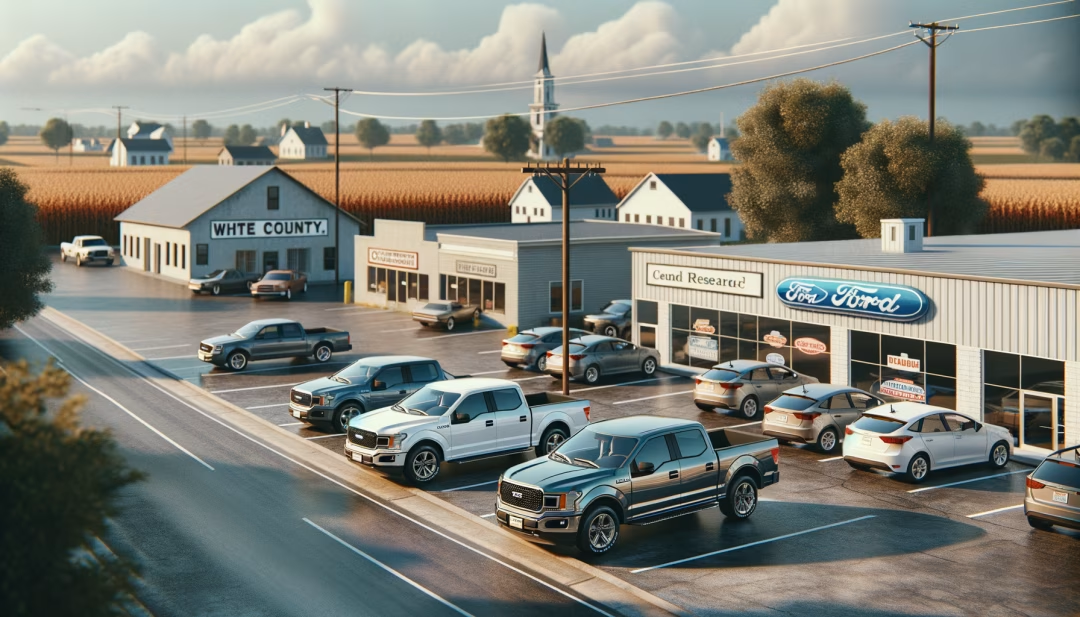
White County buyers face unique dynamics: a rural driving mix with more trucks and SUVs, broader mileage ranges due to highway use, and seasonality that affects pickup and SUV availability. Solid research helps you pinpoint fair prices, verify condition, and plan for ownership costs such as taxes, registration, insurance, tires, and maintenance. This guide explains how to read the market, what influences pricing week to week, and how to compare multiple vehicles to find the best overall value.
The best benchmark is a set of comparable vehicles that match your target year, trim, mileage band, drivetrain, and condition. Start with a short list of three to seven near matches from White County and nearby markets like Hamilton, Wabash, Wayne, Gallatin, Saline, and Jefferson counties. By comparing similar vehicles, you can spot outliers and confirm a realistic range.
After you build a comparable set, calculate a midpoint price. Vehicles with fresher tires, comprehensive service records, or a one owner history often justify a price toward the top of that range, while higher mileage or cosmetic wear may push a price toward the lower end.
In White County and nearby rural markets, pickups and SUVs typically see stronger demand in late summer through early winter, especially before harvest and during colder months. Compact sedans and hybrids may see steadier pricing year round but can tighten in supply when fuel prices rise. Convertibles and sporty coupes usually trend lower in late fall and winter, then rebound with spring weather. If your timeline is flexible, shopping slightly off peak can expand choices and help your budget go further.
Mileage and age matter, but condition and maintenance history can change the picture. A well maintained truck at 110,000 miles with documented service may outperform a lower mileage truck with deferred maintenance. Likewise, rust exposure, frame condition, and underbody cleanliness are essential in regions with winter road treatment. Inspect high touch points like seat bolsters, steering wheel, and pedals to gauge wear. A thorough test drive that includes highway speed, rough pavement, and full steering lock turns can surface suspension and alignment issues.
A strong deal balances price with long term cost. Estimate fuel use using your commute pattern and expected highway mix. Consider typical wear items on the model you are shopping, and budget for alignment, filters, belts, and fluids in the first year of ownership. Plan for Illinois title, registration, and taxes based on your county. While exact figures vary, building a simple spreadsheet that includes monthly payment, insurance estimate, fuel, and maintenance gives a clear monthly picture and prevents surprises.
Inventory in White County can change quickly. If you want a deeper search, expand to adjacent markets. You can compare active listings on used-inventory and review recently sold examples on sold-inventory. For regional context, explore nearby research pages:
Focus the discussion on facts. Bring your comparable list and highlight differences in trim, mileage, and condition to support your offer. Be ready to move quickly on vehicles with low days on lot and strong service records. For units that have been listed longer or need tires or brakes soon, justify an adjustment using current costs for those items. Keep the tone professional and aim for a win win outcome that fits the vehicle condition and the market today.
Financing terms for used cars reflect credit profile, loan amount, and vehicle age. If you are building credit or recovering from setbacks, learn how lenders view income stability, debt to income ratio, and payment history. You can explore educational resources on pages like second-chance-auto-financing-champaign-il, second-chance-auto-financing-peoria-il, and second-chance-auto-financing-st-clair-il. These guides explain documents lenders may request and ways to prepare for approval.
White County buyers often prioritize trucks and SUVs for towing, gravel roads, and seasonal weather. If you shop 4x4 trucks, inspect transfer case operation and check for vibration at highway speeds that could indicate driveshaft or tire balance issues. On SUVs, test electronic stability and advanced driver assistance features, and verify service on wheel bearings and suspension bushings. For towing, confirm factory tow rating, hitch class, brake controller wiring, and cooling package options specific to the engine and trim.
If fuel efficiency tops your list, compare compact sedans and hybrids. Review battery health data where applicable and evaluate service records for hybrid cooling fans and coolant loops. For commuters, prioritize highway ride quality, seat comfort, visibility, and driver assistance tech. Consider snow performance with appropriate all season or winter tires for rural routes.
Before you finalize a deal, read seller policies and documentation. Confirm title status, as is terms or warranties, and any inspection reports. For clarity on store policies, see visitor-agreement and privacy-policy. If questions come up, reach out through contact-us and browse ownership tips on the blog.
Start with used-inventory to filter by body style, drivetrain, mileage, and features. Save a short list of vehicles, then check sold-inventory to understand how similar units have priced and how quickly they sold. Bring your shortlist and research notes so you can compare in person, ask targeted questions, and confirm condition. If you want background on our approach, visit about-us.
Explore these pages to continue your research.