Make confident choices with this Henderson IL used car market research guide. We break down how to analyze local pricing, inventory trends, ownership costs, and value drivers so you can shop smarter in and around Henderson. Use recent sales comparisons, filter by mileage and condition, and factor seasonal patterns common to western Illinois. You will also learn how to read vehicle history, plan a fair offer, and understand fees and taxes before you visit a lot or schedule a test drive. Explore real listings on our used inventory page, study sold outcomes to spot true market value, and tap into nearby county insights to expand options without sacrificing convenience. Whether you need a dependable commuter, a family SUV, or a budget friendly first car, this page keeps the focus on clear steps, local context, and verified data.
Henderson shoppers benefit from a focused approach to comparing prices and condition. Start with a shortlist, verify history, calculate total cost beyond the sticker, and use regional data from nearby counties to validate your estimate. This page highlights practical steps, common pitfalls, and local market signals so you can decide with clarity and speed.
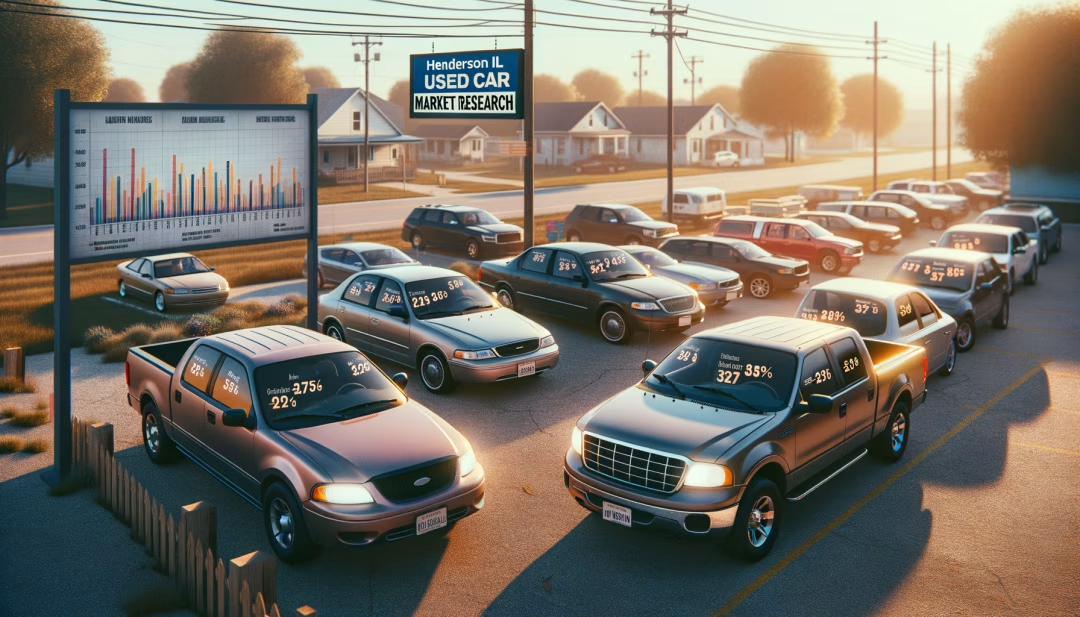
Accurate pricing starts with recent and comparable listings. Build a small dataset of 6 to 12 vehicles that match year, trim, engine, drivetrain, mileage band, and condition. Use active listings for ceiling price awareness and sold outcomes for market reality. In Henderson and nearby towns, a small sample can change weekly, so refresh data before you commit.
Use our used-inventory for active comps and sold-inventory to anchor your range. If limited Henderson data is available, expand your radius to nearby counties like Knox, Warren, Henry, and Rock Island to improve sample size. Explore neighboring market pages such as used-car-market-research-knox-il, used-car-market-research-henry-il, used-car-market-research-warren-il, and used-car-market-research-rock-island-il.
Smaller towns experience micro market shifts that differ from large metros. Inventory can rotate quickly after tax refund season, before winter, and at back to school time. Trucks and compact SUVs often command stronger resale in rural and mixed rural areas due to utility and ground clearance, while compact sedans may offer better value per mile if demand dips. Monitor these patterns across Henderson and adjacent areas to time your purchase and negotiate from data rather than guesswork.
Place your target near the middle of your adjusted range. If the vehicle has a clean history, documented maintenance, and newer wear items, it may justify pricing closer to the upper half of the fair range. A sparse history or upcoming maintenance puts value closer to the lower half.
Sticker price is only part of the equation. Budget for tax, title, registration, insurance, fuel, maintenance, and potential repairs. Rural driving can be easier on brakes but harder on tires and suspensions depending on road conditions. Balance purchase savings against long term costs and reliability records for the make and model.
A market accurate price pairs well with a right sized loan. Compare terms with credit unions and dealer partners. If you are working to rebuild credit, explore second chance programs in nearby counties to widen choices. Start with these resources to learn how lenders view payment to income, debt to income, and vehicle age and mileage limits.
A clean title and transparent history help confirm value. Read the report for accidents, airbag deployment, total loss, structural notes, open recalls, and mileage consistency. Match the VIN on the vehicle to the report and to the title. Bring a flashlight and basic tools for an in person check, or schedule a pre purchase inspection with a trusted mechanic for high value vehicles.
Lead with your comparable range, service findings, and reconditioning needs rather than emotion. If the vehicle is priced above your adjusted fair range, present your worksheet and ask if the seller would consider your target number. If you need time to think, keep your comps and revisit the option set on used-inventory to avoid pressure decisions.
Late winter to early spring can bring more inventory as trade ins from holiday and year end upgrades reach the market. Late summer often sees family vehicle turnover before school. If flexibility is possible, shop before weather shifts to avoid spikes in demand for all wheel drive and winter ready vehicles.
Confirm the title status, odometer disclosure, bill of sale details, and any emissions or safety paperwork as required. Verify lien release if applicable. Align the VIN across documents and the vehicle. Keep copies for your records and file promptly for registration and plates. Review dealership policies on return periods, arbitration, and warranty disclosures on the visitor-agreement and privacy-policy pages.
Adding a short drive can improve selection and pricing leverage. Compare insights across these nearby pages to understand supply, demand, and pricing context beyond Henderson:
For deeper research tips, model comparisons, and buyer checklists, explore our blog and learn more about our approach on about-us. If you have paperwork or policy questions, visit privacy-policy and visitor-agreement. When you are ready to study real vehicles, return to used-inventory and validate your fair price with sold-inventory.