Welcome to the complete car buying guide for Winnebago IL. Whether you are shopping your first vehicle or replacing a daily driver, this page explains how to compare used cars, estimate an out the door budget, understand financing, and prepare documents for Illinois title and registration. Learn what to look for on a test drive during Midwest seasons, how to evaluate a trade in, and ways to build a payment plan that fits your goals. You can review market insights for the area, explore options that match winter driving needs, and see how second chance auto financing may help when credit history is still improving. When you are ready to dig deeper, visit used-inventory, used-car-financing-winnebago-il, or second-chance-auto-financing-winnebago-il for more details. This guide is designed to help Winnebago drivers shop with confidence, ask the right questions, and bring home the right pre owned car, SUV, or truck.
This Winnebago IL car buying guide focuses on practical steps you can use today. You will find plain language examples, inspection checklists, and a simple approach to pricing and payments. If you want local trends, review used-car-market-research-winnebago-il. For store policies and privacy details, see visitor-agreement and privacy-policy. For more educational articles, browse blog.
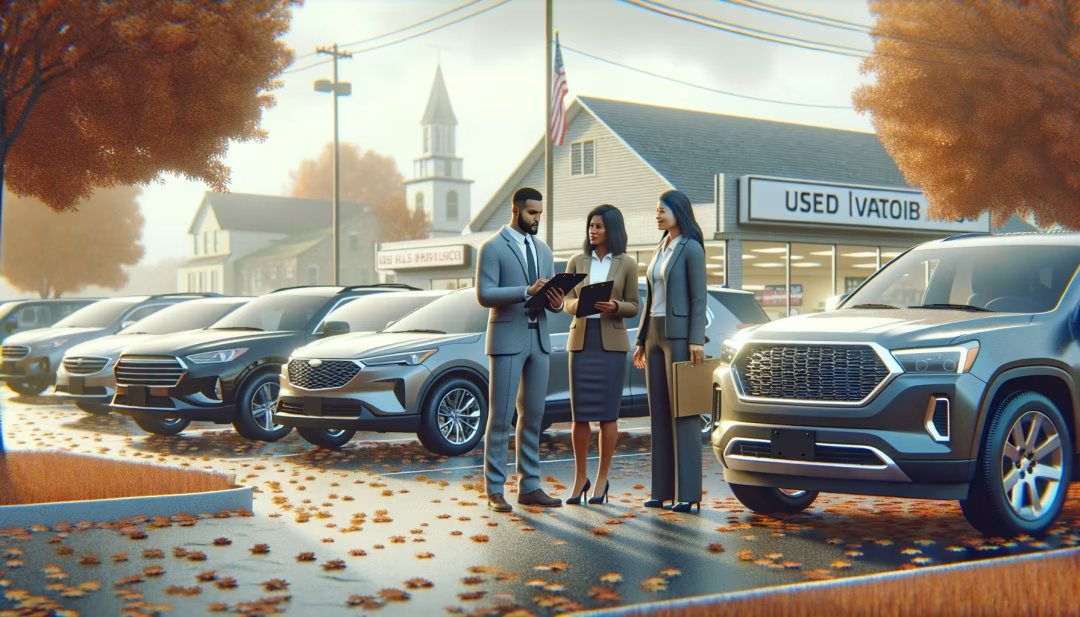
Start with a total price target that includes tax, title, license, and the Illinois documentation fee. Dealers in Illinois collect these at delivery and file your title paperwork. Because taxes and fees vary based on price and county, plan for a buffer so you do not stretch beyond your comfort zone. A simple way to estimate your out the door amount is to add a conservative percentage for taxes and fees to the vehicle price, then subtract your down payment and any trade in equity. Keep emergency savings separate from your car fund so an unexpected repair or rate change does not disrupt your plan.
Financing is more than an interest rate. Down payment, loan term, credit profile, and vehicle age all affect approval and the final payment. A larger down payment can reduce total interest and may open more lender choices. If your credit is still recovering, dedicated programs can help you start or rebuild history with on time payments.
For program details tailored to your area, review used-car-financing-winnebago-il and second-chance-auto-financing-winnebago-il.
Local supply and seasonality influence pricing. All wheel drive SUVs and reliable compact cars may see stronger demand before winter, while convertibles and rear wheel drive sports models can soften as temperatures drop. Use local market snapshots to compare trims, mileage, and features so you know when a vehicle is fairly priced. If you shop across nearby counties, you may see different availability or equipment packages. To begin, view used-car-market-research-winnebago-il. You can also compare nearby areas at used-car-market-research-boone-il and used-car-market-research-ogle-il to understand regional trends.
Think about where and how you drive. If your commute includes winter roads, traction control, good tires, and a balanced drivetrain make a real difference. Many front wheel drive cars handle snow well with quality all season or dedicated winter tires. All wheel drive adds confidence in slush and on unplowed streets. For city parking near Rockford, consider a compact SUV with a backup camera and blind spot monitoring. For open highway drives, prioritize adaptive cruise control, lane keeping assist, and a quiet cabin. If you tow or haul, check the factory tow rating, cooling package, and hitch wiring. Remember that roof racks, heated seats, and remote start can add winter comfort without a large price jump, especially on late model used vehicles.
A thorough inspection helps you avoid surprises. Review a vehicle history report for title status, mileage readings, and any accident or damage entries. Inspect tires for even wear, check brake feel, and confirm that all interior electronics function. In the Midwest, look for corrosion on the underbody, suspension components, and door sills. On the test drive, include slow residential streets, a stretch of 45 to 55 mph, and a bit of rough pavement to listen for rattles. Test the HVAC system from cold start, confirm heat strength, and verify the defroster works quickly. Park on a flat lot and check for fluid drips after the drive.
Arrive with both keys, service records, and a clean vehicle to present your trade in at its best. Fix low cost items such as bulbs and wiper blades, clear warning lights if they relate to minor maintenance, and remove personal items. Accurate payoff information helps the team calculate equity. If you still owe money on your trade, the dealer will work directly with your lender to handle the payoff and title release.
Dealers in Illinois process most documents for you. You will review a purchase agreement, titling paperwork, odometer disclosure, tax documents, and financing contracts if you finance. Bring a valid driver license, proof of insurance, and any lender stipulations such as proof of income or residence. Sales tax is generally based on the purchase price and local rates. Your dealer files for a new Illinois title and registration, and you receive plates or a temporary permit depending on your situation. If you are transferring plates, ask what is required so the transfer is smooth.
Confirm coverage before you drive away. Your insurer can add the vehicle to your policy with the VIN provided by the dealer. If your loan requires comprehensive and collision coverage, set deductibles that balance monthly cost with risk. Consider service contracts or gap coverage if you want added peace of mind. A service plan may help with unexpected repair costs on high mileage or tech heavy vehicles. Gap coverage can protect you if your car is declared a total loss early in the loan, when actual cash value may be lower than the payoff.
Once you bring the car home, set reminders for oil changes, tire rotations, and Illinois registration renewal. Save digital copies of your contract, warranty booklet, and lender contact details. If a check engine light or similar indicator appears within days, contact the dealer promptly so the team can guide next steps. Keep your credit building by setting up automatic payments and verifying that your lender reports to the credit bureaus on schedule.